
The 2024 OTA Annual Report underscores the resilience and adaptability of the organic industry amidst economic challenges. With consumers increasingly valuing health and sustainability, the organic sector is poised for continued growth. It’s driven by innovation and a steadfast commitment to its foundational principles.
1. Organic Food Sales:
1. Produce:
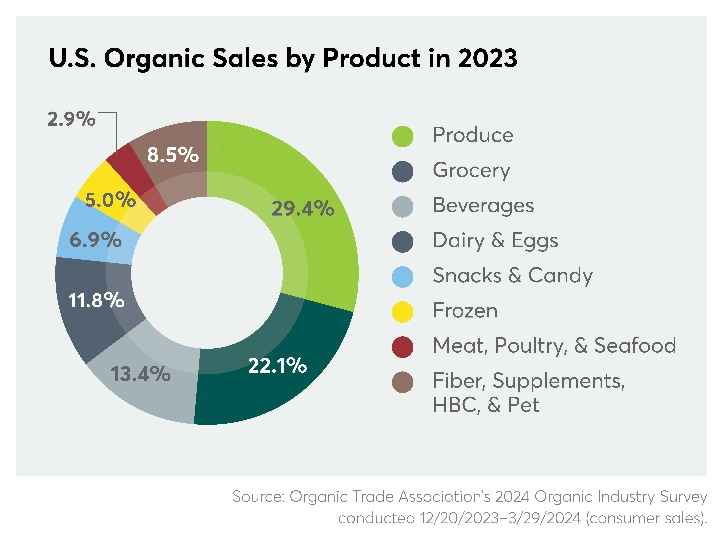
Maintained its position as the largest organic category, growing by 2.6% to $20.5 billion. Organic produce now represents over 15% of total U.S. fruit and vegetable sales. Top-selling items included avocados, berries, apples, carrots, and packaged salads. Notably, organic bananas experienced stronger growth compared to their non-organic counterparts.
2. Grocery Items:
This newly defined category, encompassing products previously grouped under breads, grains, condiments, and packaged foods. This category realized sales of $15.4 billion, marking a 4.1% increase. The top subcategories driving this growth were in-store bakery and fresh breads ($3.1 billion, up ~3%). Dry breakfast goods ($1.8 billion, up ~8%), and baby food and formula ($1.5 billion, up nearly 11%).
3.Beverages:
Recorded $9.4 billion in sales, a 3.9% rise. The category saw innovation with functional beverages focusing on enhanced hydration and mental clarity. Additionally, organic non-alcoholic beverages and mocktails gained popularity. Organic wine sales increased by 2.5% to $377 million, while organic liquors and cocktails, though the smallest segment at $59 million, experienced over 13% growth.
4. Dairy and Eggs:
This category grew by 5.5%, reaching $8.2 billion, and now accounts for over 8% of all U.S. dairy and egg sales. Milk and cream sales rose by almost 5% to $4.2 billion, and organic dairy alternatives expanded by nearly 14% to approximately $700 million.
2. Organic Non-Food Sales:
1 Personal Care Products:
Personal care products experienced the strongest growth among all non-food organic categories. Sales in this segment rose by nearly 7%, reaching approximately $1.3 billion. This growth reflects a rising consumer demand for cleaner, more sustainable personal care options. Shoppers are increasingly prioritizing products made with natural ingredients, free from synthetic chemicals, parabens, and artificial fragrances. As consumers continue to seek transparency and safety in the products they use daily, the organic personal care market is expected to maintain its upward momentum in the coming years
2. Supplements:
Supplements experienced steady growth, with sales increasing by 4% to reach a total of $2.1 billion. Products such as vitamins, minerals, herbal supplements, and probiotics made from organic ingredients are gaining popularity as shoppers become more conscious about what they put into their bodies. Additionally, the demand is fueled by a heightened focus on preventive health care and a desire for clean-label supplements free from synthetic additives and artificial ingredients.
3. Fiber Products:
Fiber products continued to dominate the organic non-food market, remaining the largest segment and accounting for approximately 40% of total sales, about $2.4 billion. Despite strong consumer demand for organic fiber items such as clothing, textiles, and home goods, sales remained flat compared to the previous year. This stagnation is largely attributed to ongoing supply chain challenges, including disruptions in raw material sourcing and manufacturing delays, rather than a decline in consumer interest.
3. Consumer Trends and Market Dynamics:
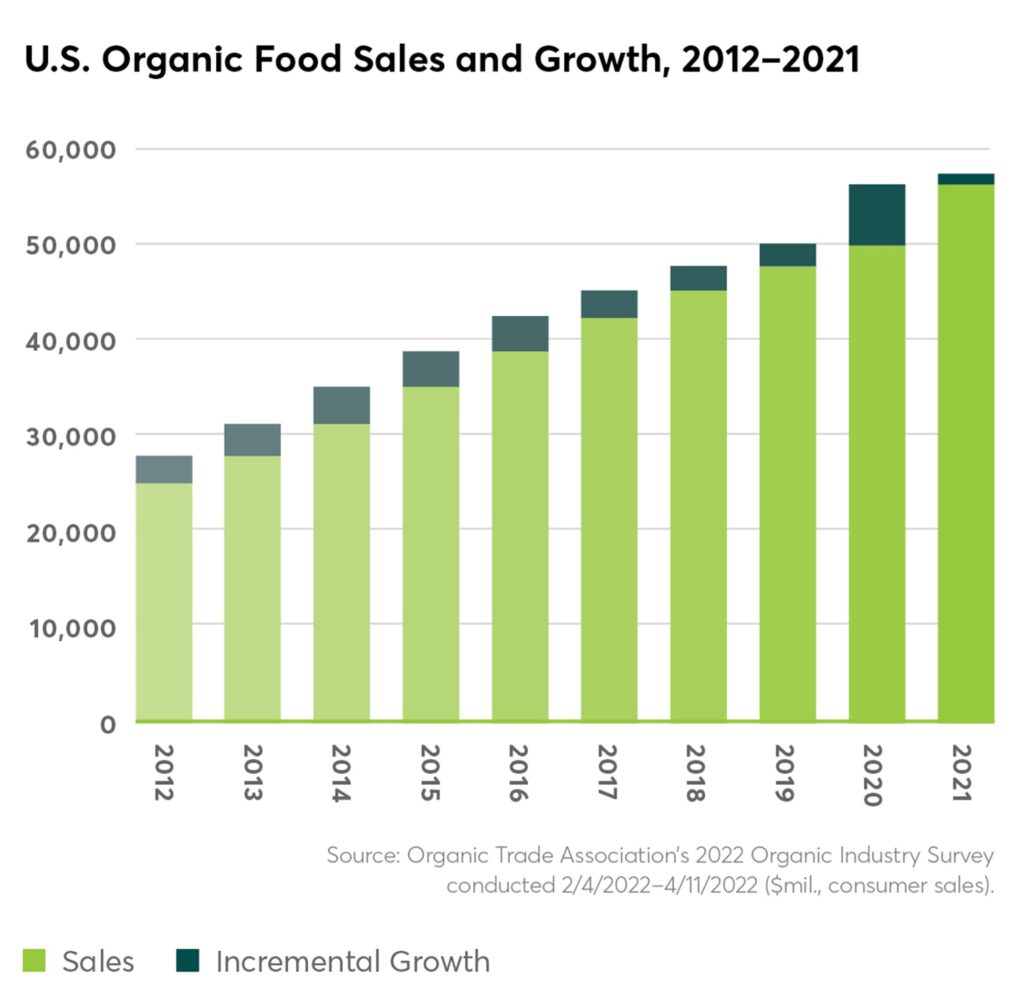
- Despite a proliferation of various product claims and labels in the market, the USDA Organic seal continued to stand out. It attracts especially consumers focused on health, sustainability, and clean products free from antibiotics, hormones, preservatives, and dyes.
- Research indicates a growing interest in organic products among Millennials consumers, who prioritize health and environmental benefits. This demographic shift suggests a promising future for the organic sector.
- The term “regenerative” has emerged, potentially causing consumer confusion. While regenerative agriculture emphasizes soil health, animal welfare, and biodiversity, principles already integral to organic standards, clear communication is essential to maintain consumer trust and understanding.