
By understanding the differences between organic and regenerative agriculture, consumers can make informed choices that support a healthier planet and food system. While “organic” has been a dominant term, a newer movement “regenerative agriculture” is gaining traction. But what do these terms really mean, and how do they compare?
1. What is Organic Agriculture?
Organic agriculture focuses on growing food without synthetic pesticides, herbicides, or genetically modified organisms (GMOs). Organic farmers use natural fertilizers, crop rotation, and biological pest control to maintain soil health and reduce environmental impact. To be labeled organic in the U.S. for instance, farms must meet USDA Organic certification standards. While organic farming is an improvement over conventional agriculture in many ways, it still allows for some natural pesticides and does not always emphasize soil regeneration or carbon sequestration.
What is Regenerative Agriculture?
Regenerative agriculture is less about what farmers avoid (like synthetic chemicals) and more about actively restoring and revitalizing farmland. It goes beyond organic principles by focusing on improving soil health, increasing biodiversity, and enhancing ecosystem resilience. Some key principles include:
- Minimal soil disturbance (no-till or reduced tillage practices)
- Diverse crop rotations and cover crops to enhance soil fertility
- Integration of livestock for natural fertilization and soil aeration
- Agroforestry and holistic land management to increase biodiversity
- Carbon sequestration to help mitigate climate change
Unlike organic farming, regenerative agriculture does not yet have a standardized certification, though initiatives like the Regenerative Organic Certification (ROC) are working to establish guidelines that incorporate both organic and regenerative principles.
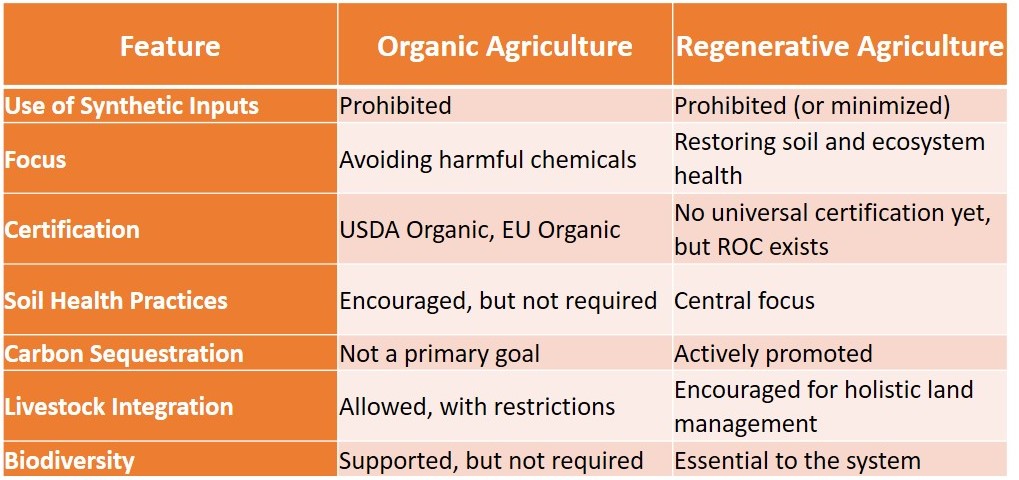
Key Differences Between Organic and Regenerative Agriculture
Which One is Better?
Neither organic nor regenerative agriculture is inherently “better” in every aspect; they each serve a role in creating a more sustainable food system. However, regenerative agriculture builds on organic principles and adds a focus on long-term soil and ecosystem health, making it a more holistic approach to sustainability. If you’re looking to make a positive impact through your food choices, consider:
- Buying organic when possible to avoid synthetic chemicals and support more sustainable farming practices.
- Seeking regenerative products from farms that go beyond organic and focus on soil regeneration and biodiversity.
- Supporting local farms that practice sustainable and regenerative methods, even if they are not officially certified.