Bio Suisse is the leading organic certification organization in Switzerland, known for its strict standards that go beyond the EU organic regulations. It’s regarded as one of the most reliable organic certifications worldwide. Consumers trust its label as a guarantee of ethical, sustainable, and high-quality agricultural products. While Switzerland is its primary market, Bio Suisse-certified goods can also be found internationally, particularly in premium organic food sectors.
Bio Suisse certification goes beyond standard organic requirements to promote a sustainable approach to agriculture. But what makes Bio Suisse so particular and respected both nationally and internationally?
1. Bio Suisse is more than just an organic label
Bio Suisse represents a rigorous commitment to ecological balance, soil fertility, biodiversity, and animal welfare. While the European Union and other international organic certifications focus on avoiding synthetic chemicals and GMOs, Bio Suisse takes a more comprehensive approach by requiring:
- Whole-farm conversion: A farm cannot be partially organic; the entire operation must adhere to Bio Suisse standards.
- Swiss origin: At least 90% of a product’s ingredients must come from Switzerland to carry the Bio Suisse label.
- Strict import regulations: Foreign organic products must meet equivalency standards and cannot be flown in by air, ensuring sustainability.
2. Bio Suisse farms specificity
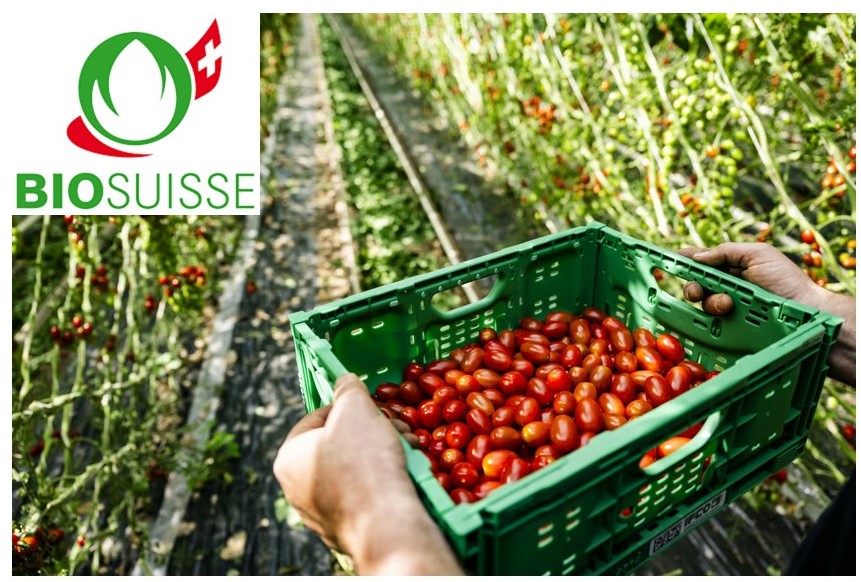
Bio Suisse places a strong emphasis on long-term sustainability. Farmers are encouraged to:
- Implement crop rotation and diverse planting to enhance soil fertility.
- Avoid synthetic fertilizers, opting instead for compost and organic manure.
- Preserve natural landscapes such as hedges, forests, and meadows to promote biodiversity.
Animal welfare is another critical pillar of Bio Suisse certification. Unlike conventional farms, Bio Suisse farms must:
- Provide animals with ample outdoor access year-round.
- Ensure natural feeding, using organic and primarily Swiss-grown fodder.
- Limit the use of antibiotics to absolute necessity, preventing overuse and resistance.
3.Achieving Bio Suisse certification
Achieving Bio Suisse certification involves a rigorous process to ensure compliance with its high organic standards. Here’s a step-by-step guide to becoming certified:
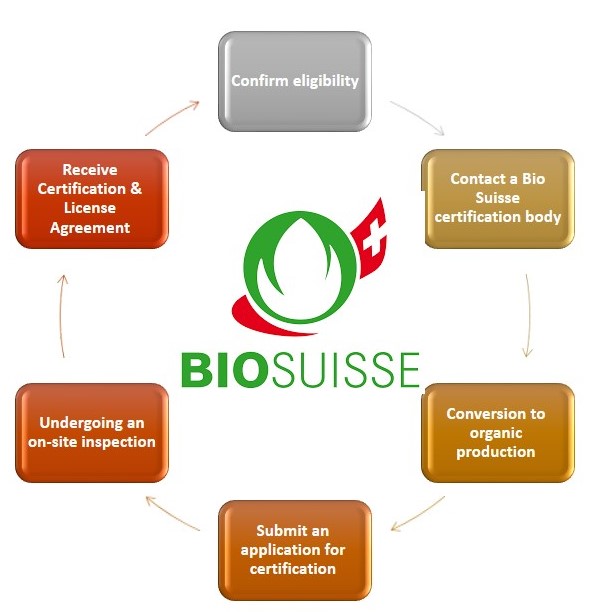
1st step : Confirm eligibility
- Your farm or business must be fully converted to organic production (no split production).
- Compliance with the Swiss Organic Farming Ordinance and Bio Suisse standards is required.
- If outside Switzerland, you must meet equivalent standards and work with an approved partner.
2nd Step: Contact a Bio Suisse certification body
- In Switzerland: Contact one of the certification bodies approved by Bio Suisse (e.g. bio.inspecta, ProCert).
- For foreign producers: Apply through a Bio Suisse import partner (only certified partners can market imports bearing the Bio Suisse label).
3rd Step: Conversion to organic production
- A conversion period of at least 2 years is required (3 years for permanent crops such as vineyards).
- Implement biodiversity measures (at least 7% of the land must support biodiversity).
- Adhere to strict animal welfare standards where applicable.
- Use only Bio Suisse approved fertilisers and pesticides.
4th Step: Submit an application for certification
- Provide detailed documentation on farming practices, inputs and compliance measures.
- Foreign applicants must demonstrate equivalence to Bio Suisse standards.
5th Step : Undergoing an on-site inspection
- A Bio Suisse approved inspector will audit your farm or establishment.
- This includes soil, crop, animal welfare and sustainability checks.Non-compliance leads to recommendations for corrective actions.
Final Step: Receive Certification & License Agreement
If approved, you receive Bio Suisse certification and the right to use the “Bud” (Knospe) label.
Certification is valid for one year and requires annual renewal and inspections.