
The Canada Organic Certification ensures that agricultural products meet strict organic farming and processing standards. This certification not only guarantees the integrity of organic products but also builds consumer trust and opens new market opportunities for farmers and businesses.
The Canada Organic Regime (COR), regulated by the Canadian Food Inspection Agency (CFIA), sets the guidelines for organic production, labeling, and certification. Whether you’re a farmer, processor, or retailer, obtaining organic certification can help you stand out in the competitive market while promoting sustainable farming practices.
In this article, we’ll explore what Canada Organic Certification is, the standards and regulations involved, the certification process, its benefits, and the challenges that organic producers face.
If you’re looking to transition to organic farming or certify your products, please visit Canada-organic official website.
1.What Is Canada Organic Certification?
1.1 Definition of Canada Organic Certification
Canada Organic Certification is an official designation that ensures agricultural and food products meet strict organic production and processing standards. This certification guarantees that products labeled as “organic” are grown and processed without synthetic pesticides, genetically modified organisms (GMOs), artificial fertilizers, or harmful chemicals. As such, it is essential for farmers, producers, and food processors who wish to sell their products as organic, both within Canada and in international markets.
1.2 Role of the Canadian Food Inspection Agency (CFIA)
The Canadian Food Inspection Agency (CFIA) is the governing body responsible for regulating and enforcing organic certification in Canada. The CFIA oversees the Canada Organic Regime (COR), ensuring that all certified organic products comply with national and international standards. The CFIA:
- Establishes and maintains organic certification standards
- Accredits organic certification bodies that inspect and certify organic operations
- Monitors compliance and investigates organic fraud
1.3 Overview of the Canada Organic Regime (COR)
The Canada Organic Regime (COR) is a federal regulatory system that sets the framework for organic certification in Canada. Key aspects of COR include:
- Organic Standards: Farmers and processors must adhere to the Canadian Organic Standards (COS), which outline permitted substances and practices.
- Accredited Certification Bodies: Organic farms and food processors must be inspected and approved by CFIA-accredited certification bodies such as EcoCert Canada, Pro-Cert, and Global Organic Alliance.
- Organic Logo: Certified organic products can display the Canada Organic Logo, which signifies compliance with national organic standards.
This certification is crucial for ensuring that organic products meet consumer expectations, environmental sustainability goals, and international trade agreements.
2. Canada Organic Standards and Regulations
To receive Canada Organic Certification, farms and food producers must follow strict guidelines under the Canada Organic Regime (COR). These standards ensure that organic products are grown, processed, and handled in ways that support environmental sustainability, biodiversity, and consumer health. Below, we break down the key requirements and regulations for organic certification in Canada.
2.1 Key Organic Production Requirements in Canada
Under the Canadian Organic Standards (COS), farms and processors must comply with the following regulations:
- No Synthetic Chemicals or GMOs
- The use of synthetic pesticides, herbicides, fungicides, and fertilizers is strictly prohibited.
- Organic crops must not contain genetically modified organisms (GMOs) or ingredients derived from GMOs.
- Sustainable Soil and Crop Management
- Farmers must use crop rotation, composting, and green manure to maintain soil fertility.
- Natural pest and weed control methods, such as companion planting and biological pest control, must be implemented.
- Organic Livestock Standards
- Animals must be raised in humane conditions, with access to outdoor areas and pasture.
- Growth hormones and antibiotics are not allowed, except in emergency veterinary care.
- Livestock feed must be 100% organic and free from GMOs or synthetic additives.
- Organic Processing and Handling Standards
- Certified organic food products must be processed without synthetic preservatives, artificial colors, or flavors.
- Facilities must prevent contamination by keeping organic and non-organic products separate.
2.2 Importance of Sustainable Farming Practices
Following Canada Organic Standards not only benefits farmers and consumers but also supports the environment. Organic farming:
- Reduces soil erosion and water pollution by eliminating harmful chemicals.
- Promotes biodiversity by creating healthier ecosystems.
- Reduces carbon footprint through sustainable agricultural practices.
2.3 Canada Organic vs. USDA Organic: Key Differences
Although both Canada Organic Certification and USDA Organic share similar principles, there are some differences:
| Feature | Canada Organic Certification | USDA Organic Certification |
|---|---|---|
| Regulatory Body | CFIA & Canada Organic Regime (COR) | USDA National Organic Program (NOP) |
| GMO Policy | Strictly prohibited | Strictly prohibited |
| Organic Feed for Livestock | 100% organic required | 95% organic feed allowed |
| Antibiotic Use in Livestock | Prohibited (except emergency cases) | Allowed for poultry in some cases |
| Certification Validity | Annual renewal required | Annual renewal required |
Understanding these differences is important for exporting organic products between Canada and the U.S. Fortunately, both countries have an Organic Equivalency Agreement, meaning that organic products certified in one country are recognized in the other.
3. How to Get Certified as Organic in Canada
Obtaining Canada Organic Certification involves a structured process to ensure compliance with the Canada Organic Regime (COR). Whether you are a farmer, processor, or retailer, following these steps will help you achieve organic certification and legally label your products as organic in Canada.
Step 1: Choose an Accredited Organic Certification Body
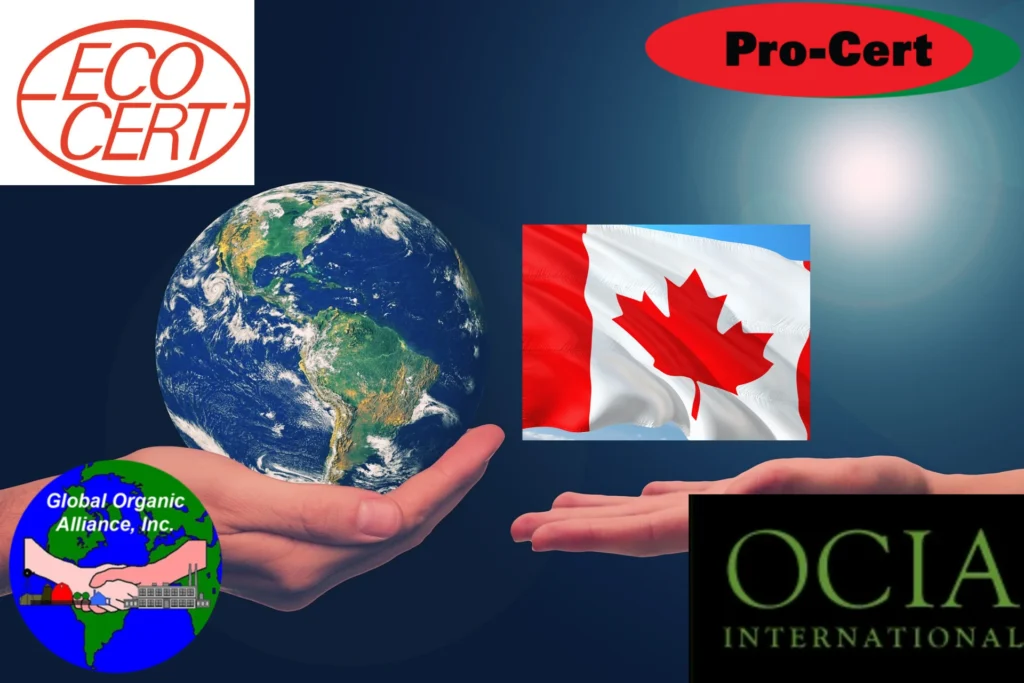
To begin the certification process, you must select a CFIA-accredited certification body. These organizations inspect and verify whether farms and businesses comply with organic standards. Some well-known certification bodies in Canada include:
- EcoCert Canada
- Pro-Cert
- Global Organic Alliance
- Organic Crop Improvement Association (OCIA)
Each certification body may have slightly different application processes and fees, so it’s important to choose one that suits your business needs.
Step 2: Prepare Your Organic System Plan (OSP)
An Organic System Plan (OSP) is a detailed document that outlines how you will comply with Canada Organic Standards (COS). This plan typically includes:
- A description of your farming or processing methods
- A list of inputs (e.g., seeds, fertilizers, pest control methods)
- Soil and water management practices
- Livestock feeding and healthcare strategies (if applicable)
- Measures to prevent contamination from non-organic substances
Step 3: Undergo Inspection and Compliance Verification
Once your OSP is submitted, the certification body will schedule an on-site inspection. The inspector will inspect farming or processing facilities to ensure compliance with organic standards. In addition, review documentation and records for traceability to verify the integrity of the process. Furthermore, assess soil, water, and pest management practices to ensure sustainable operations. Lastly, verify that organic and non-organic products are kept separate to prevent contamination. If the inspection identifies any issues, you may need to make corrective actions before certification is granted.
Step 4: Receive the Canada Organic Certification
After a successful inspection and approval, you will receive your Canada Organic Certification, allowing you to:
- Use the Canada Organic Logo on your products
- Market and sell your goods as “certified organic” in Canada
- Access export opportunities through the Canada-U.S. Organic Equivalency Agreement
How Long Does Organic Certification Take?
The entire certification process typically takes 3 to 12 months, depending on farm size, documentation accuracy, and certification body processing times.
Maintaining Organic Certification
To remain certified, you must:
- Undergo annual inspections
- Maintain detailed records of organic farming and processing practices
- Update your Organic System Plan (OSP) if changes occur
Achieving organic certification is a commitment, but it can provide financial, environmental, and market benefits for your business. In the next section, we will explore the key advantages of becoming Canada Organic Certified.
4. Benefits of Canada Organic Certification
Becoming Canada Organic Certified offers a range of advantages for farmers, food processors, and consumers. From increased market opportunities to environmental sustainability, organic certification can have a lasting positive impact on both businesses and the planet. Below are the key benefits of obtaining Canada Organic Certification.
4.1. Consumer Trust and Market Demand
The Canada Organic Logo assures consumers that the product meets strict organic standards regulated by the Canadian Food Inspection Agency (CFIA). As a result, organic products are in high demand, driven by growing consumer interest in healthier, chemical-free food options. Furthermore, certification allows businesses to sell in premium organic markets, thereby attracting eco-conscious customers who are willing to pay higher prices for organic produce, dairy, meat, and packaged goods
4.2. Financial and Business Growth Opportunities
Organic-certified products typically sell at higher prices, providing farmers and producers with better profit margins. Additionally, there is access to government grants and financial incentives for organic farming and sustainability practices, further supporting the business’s growth. Moreover, certified producers can export to international organic markets, benefiting from agreements such as the Canada-U.S. Organic Equivalency Arrangement and trade deals with Europe and Japan.
4.3. Environmental and Health Benefits
Organic farming helps reduce soil degradation, water contamination, and biodiversity loss by eliminating synthetic pesticides and fertilizers. In addition, it encourages sustainable farming practices such as crop rotation, composting, and natural pest control, all of which improve long-term soil fertility. Furthermore, organic food is free from GMOs, artificial preservatives, and synthetic additives, making it a healthier choice for consumers.
4.4. Competitive Advantage and Brand Recognition
Certification effectively differentiates brands from non-organic competitors in the market. As a result, restaurants, grocery stores, and food retailers increasingly prefer sourcing from certified organic farms to meet growing consumer demand. Moreover, having Canada Organic Certification strengthens brand credibility and enhances business reputation within the organic industry
4.5. Contribution to a Sustainable Future
By obtaining Canada Organic Certification, farmers and food producers gain not only economic benefits but also contribute to a more sustainable and environmentally friendly food industry.
5.Challenges and Costs of Organic Certification in Canada
While Canada Organic Certification offers numerous benefits, the process also comes with challenges, particularly for small farms and new businesses. Understanding the costs, regulatory hurdles, and operational changes required for certification can help farmers and food producers prepare effectively.
5.1. Cost of Organic Certification
Obtaining and maintaining organic certification involves various fees, which can be a financial burden for some producers. Key costs include:
- Application Fees: Ranges from $250 to $1,500, depending on the certification body.
- Inspection Fees: Annual inspections typically cost $500 to $2,000, based on farm size and complexity.
- Renewal Fees: Certification must be renewed each year, with renewal costs varying from $300 to $1,000.
- Transition Costs: Shifting from conventional to organic farming requires investments in organic seeds, soil improvement, and pest control alternatives.
Some government grants and subsidies are available to help farmers offset certification costs. Programs such as the Canadian Agricultural Partnership (CAP) provide financial assistance for organic transitions.
5.2. Lengthy Certification Process
The process of becoming certified organic can take 6 months to 3 years, depending on the type of operation.
- Farmers must adhere to a three-year transition period before their land can be fully certified organic.
- Businesses need to submit detailed records and undergo thorough inspections before approval.
- Compliance with evolving Canada Organic Standards (COS) requires ongoing adjustments and documentation.
5.3. Strict Compliance and Record-Keeping
Certified organic producers must maintain detailed records to ensure full traceability and compliance, including:
- Input records: Fertilizers, pest control methods, and soil amendments used.
- Livestock records: Animal feed sources, health treatments, and pasture access.
- Processing logs: Handling, packaging, and storage methods to prevent contamination.
Failure to maintain proper documentation can result in certification delays, penalties, or revocation.
5.4. Limited Access to Organic Inputs
Finding certified organic seeds, livestock feed, and fertilizers can be difficult and expensive.
- Organic-approved products often cost 30-50% more than conventional alternatives.
- The availability of organic inputs varies by region, making sourcing a challenge for rural farmers.
- Supply chain issues can impact pricing and availability of essential organic farming materials.
5.5. Risk of Cross-Contamination
Organic farms must take precautions to prevent contamination from non-organic sources, such as:
- Pesticide drift from neighboring conventional farms.
- GMO cross-pollination, which can occur in crops like corn and soybeans.
- Water contamination from non-organic farming practices nearby.
Implementing buffer zones, proper storage, and strict handling procedures can help minimize contamination risks.
Becoming Canada Organic Certified is a rewarding but demanding process. While challenges such as certification costs, compliance requirements, and market competition exist, the benefits of consumer trust, premium pricing, and sustainability often outweigh these hurdles.
If you’re considering organic certification, research available certification bodies, government funding programs, and organic farming best practices to ensure a smooth transition. The future of organic agriculture in Canada is bright, and with careful planning, your business can thrive in this growing industry.