
Key Points
In this blog you will find detailed responses of all your questions about Royal Jelly Supplements
- What is Royal Jelly?
- Health Benefits of Royal Jelly
- budget-friendly royal jelly supplements
- What is the difference between propolis and royal jelly?
- Should You Give Royal Jelly to Your Child?
- Potential Side effects of Royal Jelly Supplements
1. What is Royal Jelly?
Royal jelly is a nutrient-rich substance produced by worker bees to feed the queen bee. It’s packed with proteins, vitamins, minerals, and fatty acids, making it a popular supplement for boosting overall health. Traditionally used in natural medicine, royal jelly is believed to boost immunity, improve skin and brain health. However, quality matters—choose organic, high-purity supplements for the best results. As with any supplement, talk to a healthcare professional before adding it to your routine
2. Health Benefits of Royal Jelly
2.1. Supports Immune Function
Royal jelly contains antioxidants and antimicrobial properties that may help strengthen the immune system. Some studies suggest it can reduce inflammation and enhance the body’s ability to fight infections.
2.2. Boosts Energy and Reduces Fatigue
With its rich supply of B vitamins and amino acids, royal jelly can help combat fatigue and improve physical and mental performance. It’s often used by people looking for a natural way to increase energy levels.
2.3. Promotes Skin Health
Royal jelly is commonly found in skincare products due to its potential to enhance collagen production and improve skin hydration. Some research suggests it can reduce the appearance of wrinkles and aid in wound healing.
2.4. May Support Hormonal Balance
Some studies indicate that royal jelly may help balance hormone levels, especially in women experiencing menopause. It’s thought to support estrogen production, which can help alleviate symptoms like hot flashes and mood swings.
2.5. Enhances Brain Function
Royal jelly may have neuroprotective effects, supporting cognitive function and memory. Some researchers believe it could be beneficial for individuals at risk of neurodegenerative diseases like Alzheimer’s.
“Royal jelly is a substance of exceptional biological richness, a true treasure of the hive”.
French biologist Émile Plagnet
3. budget-friendly royal jelly supplements
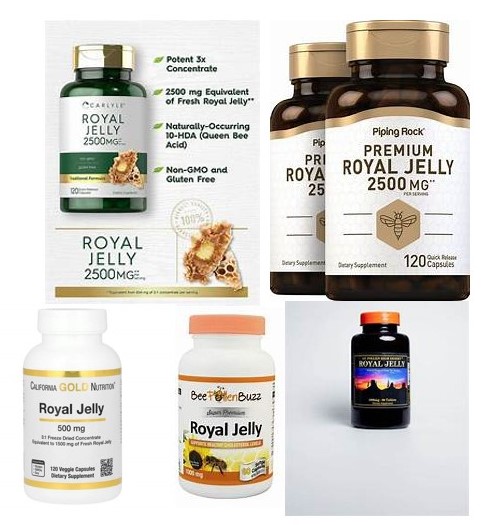
Finding budget-friendly royal jelly supplements in the United States is achievable through various reputable retailers. Here are some options to consider:
- Carlyle Royal Jelly 2500 mg Capsules: Each serving provides 2,500 mg of royal jelly in quick-release capsules. The product is gluten-free, non-GMO, and free from artificial additives. Available in a 120-count bottle.
- Piping Rock Supreme Royal Jelly 2500 mg Capsules: This supplement offers 2,500 mg of royal jelly per serving in quick-release capsules. A 120-capsule bottle is priced at $24.69, with discounts available on multiple bottle purchases.
- Bee Buzz Premium Royal Jelly 1000 mg Soft Gels: Each soft gel contains 1,000 mg of premium royal jelly. A bottle of 60 soft gels is priced at $24.99.
- CC Pollen Royal Jelly One Gram Capsules: These capsules provide 1,000 mg of royal jelly per serving. A 60-capsule bottle is available starting from $12.95.
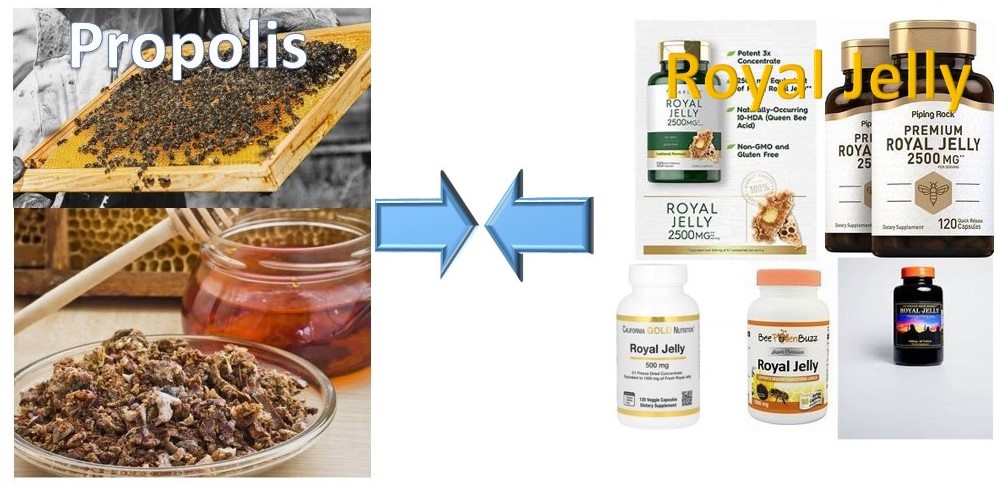
4. What is the difference between propolis and royal jelly?
4.1. Source and Purpose
- Propolis: A resinous substance made by bees from tree sap, beeswax, and their own enzymes. It is used to seal and protect the hive from bacteria, fungi, and other pathogens.
- Royal Jelly: A milky secretion produced by worker bees, used exclusively to feed the queen bee and larvae, promoting their growth and longevity.
4.2. Composition
- Propolis: Rich in flavonoids, polyphenols, and antioxidants, making it a powerful antimicrobial and anti-inflammatory agent.
- Royal Jelly: Contains proteins, B vitamins, fatty acids, and hormones that support energy, skin health, and hormonal balance.
4.3. Who Should Use Which?
- Propolis is ideal for those looking for immune support, antibacterial effects, and skin healing.
- Royal Jelly is beneficial for individuals seeking energy boosts, skin nourishment, and hormonal balance.
5. Should You Give Royal Jelly to Your Child?
If your child has no bee-related allergies and your pediatrician approves, a small dose may provide health benefits (a pea-sized amount of fresh jelly or a small portion of honey-mixed royal jelly). However, it’s not essential, and a balanced diet can offer similar nutrients naturally.
6. Potential Side Effects of Royal Jelly Supplements
While royal jelly is generally safe, some people may experience allergic reactions, particularly those allergic to bees or pollen. Symptoms can include itching, swelling, or difficulty breathing. Pregnant or breastfeeding women should consult a doctor before using royal jelly supplements