
Blog Key points
- During Donald Trump’s first presidency (2017–2021), the administration’s position on organic food was complex and often contradictory. While the organic sector continued to grow, the administration’s deregulatory approach and prioritization of conventional agribusiness created challenges for organic farmers and consumers.
- Key setbacks, such as the rollback of the Organic Livestock and Poultry Practices (OLPP) rule and delayed organic regulations, led to concerns over the weakening of the organic label. However, some trade policies, such as provisions in the USMCA, helped strengthen enforcement against fraudulent organic imports.
- In his second term, President Trump appointed Robert F. Kennedy Jr. as Secretary of Health and Human Services. Kennedy, known for his criticism of ultra-processed foods and advocacy for organic farming, introduced initiatives aimed at promoting healthier eating habits. These included proposals to ban processed foods in schools, eliminate harmful ingredients like high-fructose corn syrup, and encourage organic farming through subsidies. This marked a shift towards integrating organic food promotion within the administration’s health agenda
- As the organic food movement continues to evolve, current administrations will likely shape the regulatory landscape in new ways. Whether through stronger organic standards, increased federal support, or new sustainability initiatives
The Growth of the Organic Industry Under Trump
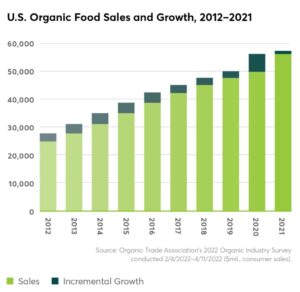
Despite the regulatory hurdles, the organic food industry saw continued expansion under Trump’s presidency. The Organic Trade Association (OTA) reported steady increases in organic food sales, reaching $50 billion in 2019. Consumers increasingly turned to organic products due to growing awareness of health benefits, sustainability, and concerns over pesticides and genetically modified organisms (GMOs).
However, the administration’s broader agricultural policies and regulatory decisions sometimes clashed with the organic industry’s goals, particularly regarding environmental protections, labeling standards, and support for organic farmers.
Key Policy Actions Impacting Organic Food
- Rollback of Organic Animal Welfare Standards
One of the most controversial moves by the Trump administration was the rollback of the Organic Livestock and Poultry Practices (OLPP) rule. The rule, finalized during the Obama administration, sought to enhance animal welfare standards for organic livestock, including ensuring that organic poultry had meaningful outdoor access.
In 2018, the U.S. Department of Agriculture (USDA) under Secretary Sonny Perdue officially withdrew the rule, arguing that the USDA lacked authority to impose such requirements. This decision was widely criticized by organic farmers and consumer advocacy groups, who argued that it weakened the integrity of the organic label and favored large-scale industrial farms over small organic producers.
- Delays and Changes to Organic Regulations
The Trump administration delayed and altered several proposed regulations that were designed to strengthen the organic sector. In addition to the OLPP rollback, the administration stalled the implementation of rules governing organic food labeling, hydroponic farming, and the oversight of fraudulent organic imports.
While the USDA continued to enforce organic certification standards, critics argued that delays in regulatory updates created loopholes that undermined consumer confidence in the organic label.
- Support for Conventional Agribusiness Over Organic Farming
Trump’s USDA prioritized large-scale conventional agribusiness over small and medium-sized organic farms. While organic farmers benefited from some federal programs, such as the Organic Certification Cost Share Program (OCCSP), overall support for organic agriculture remained limited compared to subsidies and relief efforts directed toward conventional farmers.
For example, during the COVID-19 pandemic, organic farmers received less direct financial assistance from government relief programs, as most aid was funneled toward large agribusinesses affected by supply chain disruptions.
Consumer and Industry Response
The organic food industry and consumer advocacy groups responded to the Trump administration’s policies with increased activism. Organizations like the Organic Trade Association, the Center for Food Safety, and various organic farming coalitions pushed back against regulatory rollbacks and fought to maintain the integrity of organic standards.
Despite policy setbacks, consumer demand for organic food remained strong. More grocery stores expanded their organic selections, and farmers markets continued to showcase organic produce. The rise of direct-to-consumer organic food delivery services further demonstrated that public interest in organic food was not diminishing.